AI Garden Design From Your Own Photo

Explore a garden with layered planting, inviting paths, and a place to pause. Start from your own photo and turn a planting idea into a visual concept.

Workbench view

Find the planting character your garden needs

An AI garden planner is useful when you know how you want a garden to feel but cannot picture the planting together. Use your photo to explore border depth, repeated forms, open space, and focal points.

See planting as a whole

Individual plant photographs rarely show how a border will read beside your fence or terrace.

Give the eye somewhere to rest

A garden can feel busy when every corner competes for attention. Ask for a clear focal point, a quieter background, or repeated planting along a route.

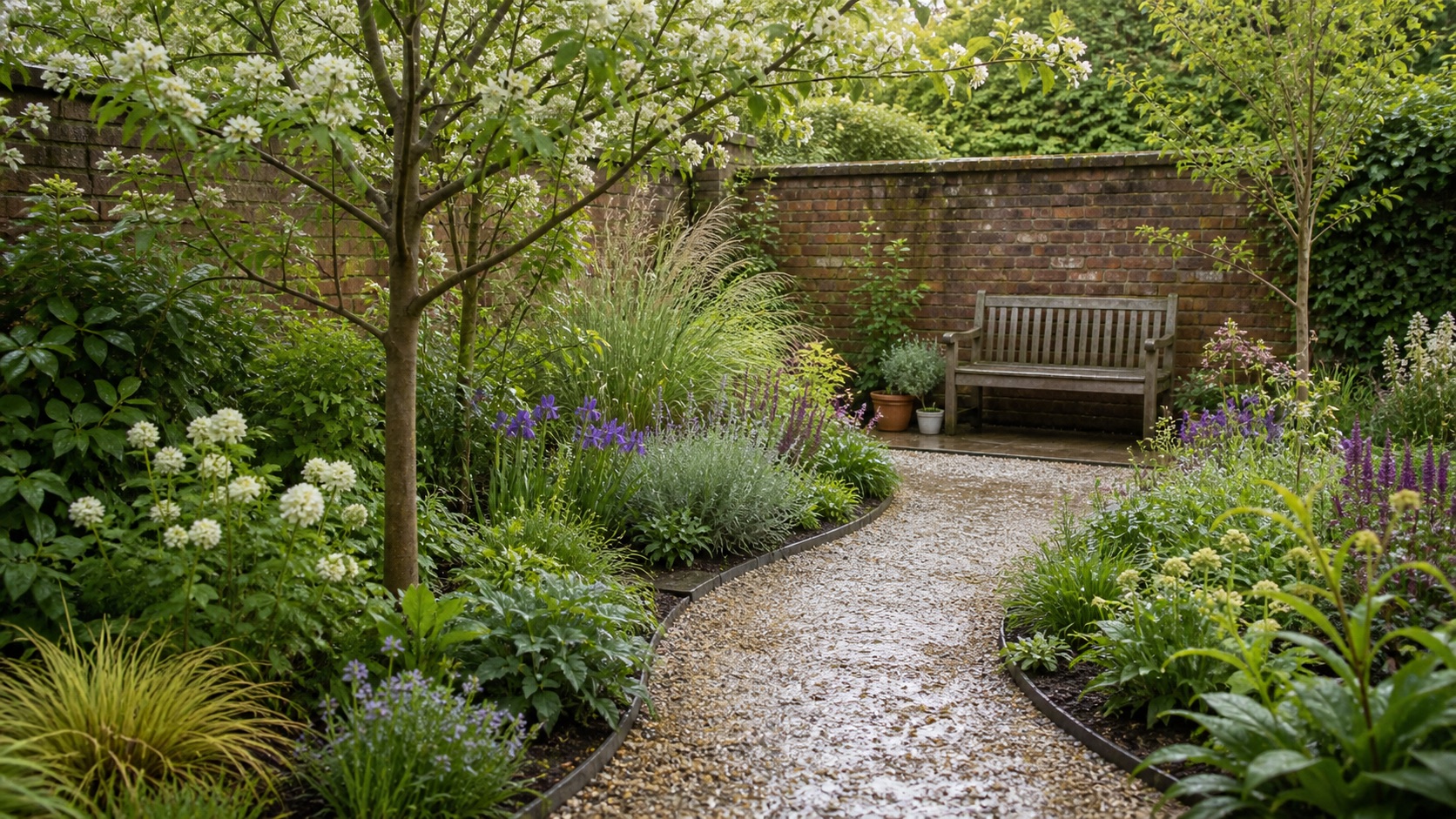
Garden concept with a curved gravel path, flowering borders, and a timber bench against a brick wall

Explore atmosphere without losing the site

Keep a mature tree, existing steps, or a useful path in your brief. Then compare a formal arrangement with an informal planted direction.

Turn preferences into a planting conversation

Save the concept that best expresses the density, color balance, and garden mood you want. Tell a gardener which parts matter and which are flexible.

Build a garden brief around layers, paths, and focal points

Garden concept with a curved gravel path, flowering borders, and a timber bench against a brick wall

Build a useful border reference

Photograph the bed together with the adjacent path, wall, lawn, or terrace. A straight, well-lit view makes the planting area easier to understand than a close-up of one flower. If the border is bare, show its edges clearly.

Create a concept
Garden concept with a curved gravel path, flowering borders, and a timber bench against a brick wall

Describe layers instead of a shopping list

A useful brief can ask for taller planting at the back, lower forms near the path, and repetition through the middle. This communicates the visual structure without pretending that the AI has selected a horticulturally suitable planting scheme.

Create a concept
Garden concept with a curved gravel path, flowering borders, and a timber bench against a brick wall

Choose a garden character with intention

Try the available garden style directions to explore a more formal, cottage, native-inspired, or Japanese-inspired appearance. Add the details that matter to your space, such as restrained color, an open view from the window, or a quieter seating corner.

Create a concept
Garden concept with a curved gravel path, flowering borders, and a timber bench against a brick wall

Use a focused planting prompt

Try: Keep the existing path and timber fence. Create an informal border with repeated grasses, varied foliage textures, and a restrained white and purple flower palette. Leave the view from the seat open. This describes a coherent visual goal.

Create a concept
Garden concept with a curved gravel path, flowering borders, and a timber bench against a brick wall

Identify valued existing plants

Describe the established features you want to retain before asking for a new planting character around them. Name the mature tree, favorite shrub, or climber that matters to the existing garden.

Create a concept
Garden concept with a curved gravel path, flowering borders, and a timber bench against a brick wall

Check what changed

Compare the proposal with the source photograph before deciding which parts of the visual direction are useful. Notice altered bed edges, missing shrubs, moved paths, or a boundary that no longer matches.

Create a concept

Garden ideas for borders, retreats, and established spaces

Garden concept with a curved gravel path, flowering borders, and a timber bench against a brick wall

Find a direction for an empty planting bed

A homeowner facing a strip of bare soil can upload the full border and request a layered composition that suits the surrounding materials. Compare a fuller planted look with a lighter arrangement.

How to explore your garden idea

Create a concept

Choose the garden view

Upload a JPG, PNG, or WebP image up to 10 MB. Include the planting area and the features around it.

Explain the atmosphere and priorities

Choose a direction, then describe the plants or structures to keep, preferred colors, desired density, and the areas that should remain open.

Create and assess a concept

Review the credit estimate and generate. Check the relationship between planting, paths, and seating before downloading a useful result.

Questions about planning a garden with AI

AI Interior Design logo

Picture the garden you want to grow

Start with one garden photo and a clear planting priority. Create a visual direction to refine with the needs of your real site.

Create a concept