Prompt
Template 1 of 2Redesign this art gallery while preserving the visible envelope, fixed openings, camera position, and realistic scale. Use a calm contemporary direction with balanced materials, practical storage, and uncluttered circulation.
Explore a gallery interior that gives the collection room to speak. Use a venue photo to develop the visual relationship between display walls, visitor movement, resting points and the gallery’s identity.
Show the room clearly, including the doors, windows and fixed features that should guide the concept.
Choose a style and lighting mood. Add the details you want to keep or change.
Review the credit cost, generate your concept and download a useful result.
Use this art gallery design generator to explore a direction around your source image and these priorities. Focus on uninterrupted viewing sightlines, flexible wall and display zones, controlled artwork-safe lighting.
Large paintings, small objects and installation pieces ask different things of a gallery.
The first view through the entrance should help people understand where to begin without revealing every part of an exhibition at once.
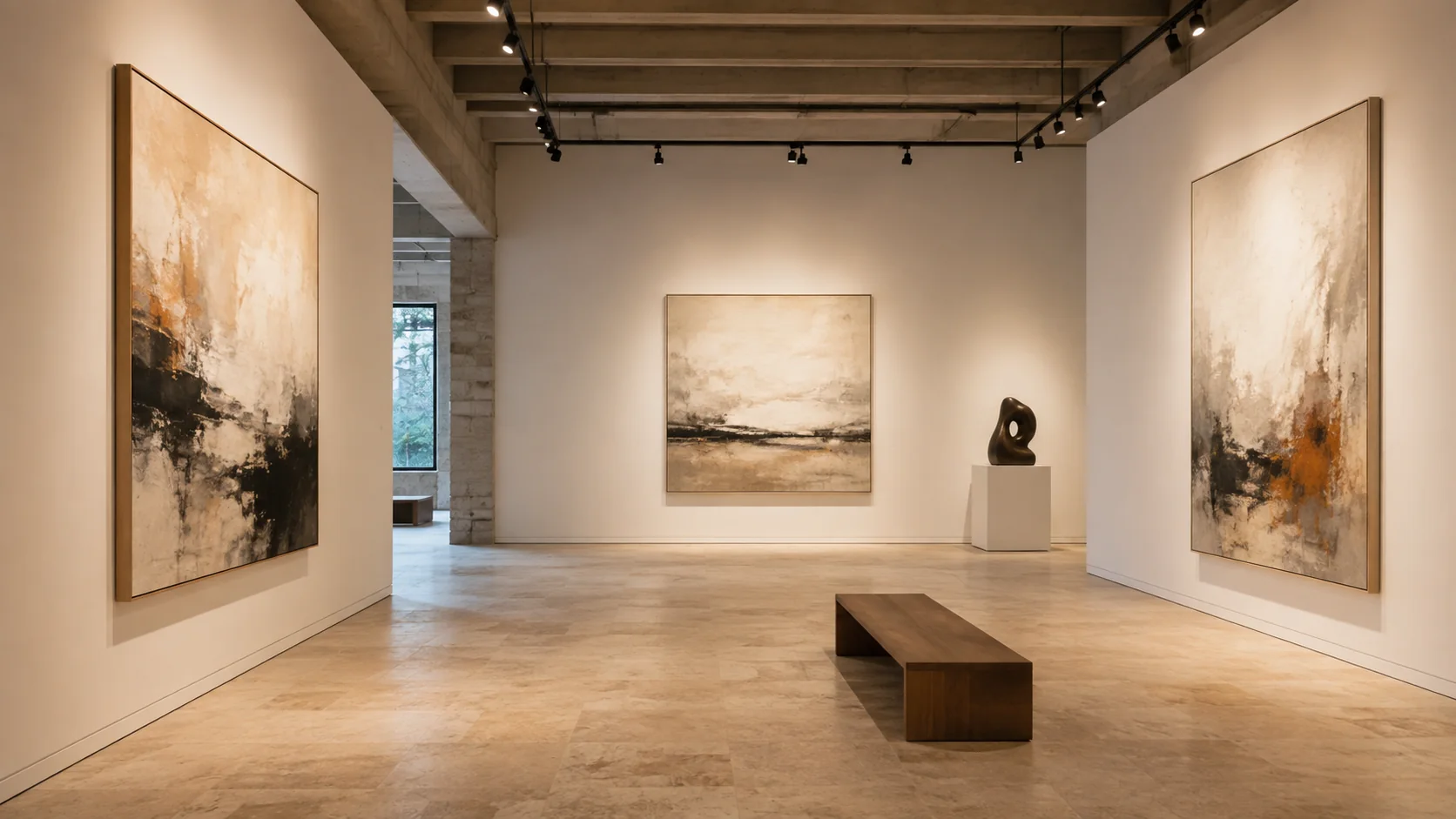
Movable plinths and temporary partitions may suit changing exhibitions better than elaborate fixed joinery.
An even gallery atmosphere, selective emphasis and controlled daylight can change how the room feels.
Describe the scale and medium of the collection, how frequently exhibitions change and whether the room should feel neutral or expressive. A visually impressive interior can compete with the work.
Create my design conceptDescribe whether visitors browse freely or follow a sequence. A concept can explore the atmosphere of that journey and the relationship between display zones. It cannot calculate accessible routes, viewing distances or visitor capacity from a photograph.
Create my design conceptState what must remain flexible and identify the existing walls, columns and doors to retain. Review whether a proposed feature offers a useful display purpose rather than just filling a blank area.
Create my design conceptA gallery operator wants a former retail space to support paintings and small sculptures. The source photo shows broad glazing, fixed columns and a narrow entrance. The brief asks for restrained walls, movable-looking display elements and a clear first viewing point.
Keep one main direction per attempt so you can understand which change influenced the result. Inspect the completed concept against your original brief. Download a useful result, or change one requirement and generate another option for comparison.
Save notes on the finishes, furniture relationships and atmosphere you want to keep. Bring those notes, the concept and your actual measurements to the person helping you specify or implement the project.
Judge whether the proposed materials and display elements support the collection you actually intend to present.
Any physical hanging system or freestanding support needs its own design and load assessment.
Describe the visual effect you want while acknowledging the specific work on display. The image is useful for communicating character and apparent focus. Conservation conditions, exposure, color quality and equipment selection require specialist assessment; the brightness of a rendering is not a lighting specification.
A concept helps the team discuss how the space might feel during an exhibition before curators and technical specialists resolve display requirements.
Use a level wide-angle view that records wall lengths, ceiling systems, entries, columns, windows, and the visitor route.
Upload a JPG, PNG or WebP image up to 10 MB. Use a level photograph with readable detail; heavy filters and extreme wide-angle distortion can make the reference harder to interpret.
State the art scale and media, exhibition rhythm, visitor volume, movable display needs, and desired relationship between neutral space and identity. Replace the example details below with the facts of your own space.
Example brief: Develop a restrained contemporary art gallery concept from this venue photo. Keep the existing columns, entrance and windows. Use quiet wall finishes with flexible display zones for paintings and small sculptures. Suggest a clear visitor sequence, a modest resting point and discreet reception.
Let the artwork remain the visual focus, with controlled-looking illumination rather than decorative fixtures dominating the room.
Check the selected room type, choose a design style and set the lighting mood. Add your priorities in Custom Requirements, including retained furniture and fixed elements.
Choose from the available aspect ratios and output resolutions, then review the displayed credit cost before generating.
A concept cannot specify conservation light levels, security, accessibility, fire egress, hanging loads, or climate control; specialists must do so.
Use it only to discuss the desired visual atmosphere. A generated image cannot establish conservation exposure, suitable light levels or material behavior. Give the collection’s requirements to the appropriate curator or lighting specialist, then use the visual concept to communicate the spatial character within those confirmed constraints.
The reference and your requirements guide the design, but exact preservation is not guaranteed. Check windows, doors, fixed features and retained furniture against the original. If something important changes, revise the brief or take another reference photo before developing that option.
You receive a generated design image that you can review and download. It is a visual reference for your project, not an editable CAD drawing, an exact shopping list or a measured specification. Use completed results to develop and communicate your preferred direction.
No. Page imagery illustrates a possible design direction. Your result is generated from your own photo and requirements, so the pictured furniture and finishes are not a guaranteed outcome.

Bring the existing space and a focused brief together. Explore a visual direction you can review, refine and discuss before making the next project decision.
Create my design concept